

Mental health and addiction treatment work best when both conditions are treated together rather than in separate tracks. Integrated care can include detox, residential support, therapy, psychiatric review, and step-down planning based on the person’s current needs.
- 1Mental health symptoms and substance use often influence each other and should be assessed together.
- 2Integrated treatment may include therapy, psychiatric care, medication review, and relapse prevention in the same plan.
- 3The right level of care depends on safety, symptom severity, and how stable the person is outside treatment.
- 4Local treatment can make scheduling, family involvement, and ongoing care easier to sustain.
- 5Admissions and insurance guidance help people move from searching into treatment faster.
When substance use and mental health symptoms show up together, people can spend a long time being sent in circles. One provider focuses on the drinking or drug use. Another focuses on anxiety, depression, trauma, or mood symptoms. The person and family are left trying to make two separate plans fit one life.
That is why integrated care matters. The goal is not to force everything into one label. It is to understand how the symptoms interact and build a treatment plan that can hold the full picture.
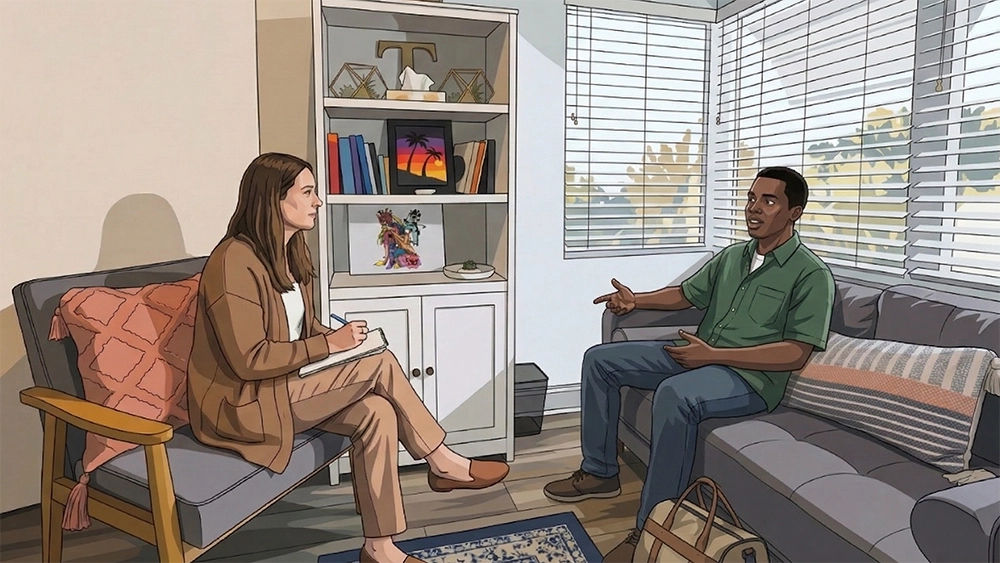
Why Treating One Side Is Usually Not Enough
Substance use can make mental health symptoms worse. Mental health symptoms can also push a person toward substances when they are trying to sleep, calm down, function, or get through the day.
That back-and-forth can be exhausting. Someone may stop using for a short time and still feel depressed, anxious, restless, or unsafe in their own head. Or they may start therapy for mental health symptoms while substance use continues to undo the progress.
An integrated assessment should look at both sides at once: mood, anxiety, trauma history, sleep, substance use, withdrawal risk, medications, safety, prior treatment, and support at home.
That does not mean every answer is clear right away. It means the treatment team is not pretending one issue can be ignored while the other is handled.
What Dual Diagnosis Care Can Include
Dual diagnosis care may include therapy, group work, psychiatric evaluation, medication review, relapse-prevention planning, and family support. The exact plan depends on safety, symptoms, and how much structure the person needs.
If withdrawal is active, detox may need to come first. If the person needs a more protected setting, residential treatment may be the better starting point. If they are medically stable and able to participate consistently, outpatient or step-down support may fit.
The important part is coordination. If cravings rise when anxiety spikes, the plan should address both. If depression leads to isolation and missed appointments, that should be part of relapse-prevention work. If sleep is getting worse, the team should not treat it like a side note.
Good treatment is not just a list of services. It is a plan that notices the patterns keeping someone stuck.
What Families Should Ask
Families do not need to know the perfect diagnosis before asking for help. They do need to be honest about what they are seeing.
Useful questions include:
- Is the person using substances to manage panic, depression, trauma, sleep, or mood changes?
- Has treatment failed before because one side of the problem was left out?
- Is withdrawal or medical stabilization a concern?
- Does the person need 24-hour structure right now?
- What support will exist after the first phase of care?
These questions are more useful than trying to choose a program based only on the name. A person may need detox first, residential care first, or a less intensive step if they are stable enough. The recommendation should come from the full clinical picture.
Moving From Searching To A Real Plan
Searching can become its own loop. Families read page after page, compare terms, and still do not know what to do next.
The next useful step is a conversation that narrows the options. What is happening today? What has already been tried? What symptoms are most urgent? Is the person safe? What role is substance use playing? What support is realistic after admission?
Insurance and admissions questions are part of that plan too. Asking early can clarify what services may be available and help the family move with less confusion if the person is ready to begin.
If you are looking for integrated mental health and addiction treatment in Palm Beach County, call Amity Palm Beach at (888) 664-0182. The team can help you sort through options, explain admissions, and point you toward the next right step.
Related care paths
Frequently Asked Questions
What is dual diagnosis treatment?
Dual diagnosis treatment is care designed for people who are dealing with both a substance use disorder and a mental health condition at the same time.
Why is integrated care important?
When one issue is treated without the other, major relapse triggers can stay in place. Integrated care is more likely to address the full treatment picture.
What levels of care might be involved?
Depending on safety and symptoms, treatment may involve detox, residential care, step-down support, therapy, and ongoing psychiatric follow-up.
Can treatment still help if I am not sure what diagnosis fits?
Yes. A full assessment can clarify the current picture and help the clinical team decide what kind of support is needed first.
How do I start in Palm Beach County?
Call Amity Palm Beach at (888) 664-0182 to ask about [dual diagnosis](/dual-diagnosis), [residential treatment](/programs/residential), and [detox](/programs/detox).
Sources & References
Read the sources referenced in this article.
- Substance Use and Co-Occurring Mental Disorders — NIMH (2024)
- Co-Occurring Disorders — SAMHSA (2025)
- Treatment for Substance Use Disorders — SAMHSA (2025)
Amity Palm Beach
Amity Palm Beach