
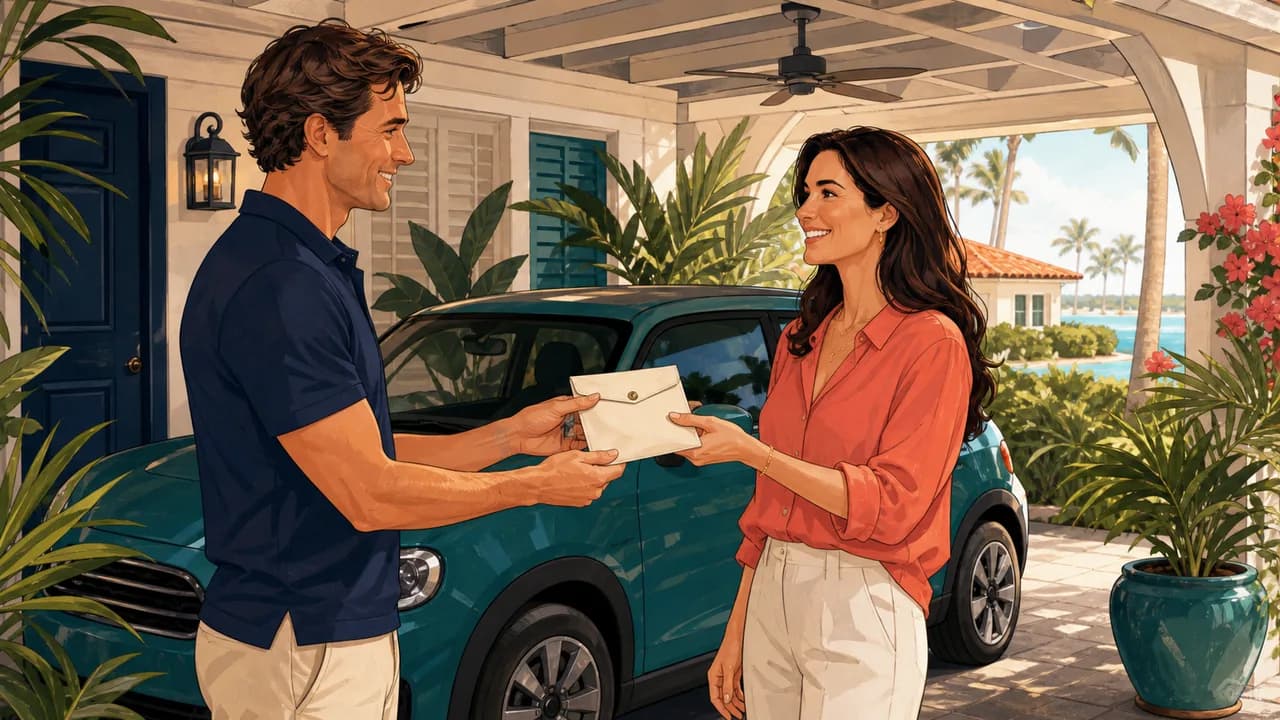
Choose a permitted storage location, remove valuables, document the vehicle’s condition, limit key access, preserve insurance and registration decisions, and name who may move the car and when that permission ends.
- 1Confirm parking or storage rules before leaving the vehicle.
- 2Give keys only to a named person for a defined purpose.
- 3Follow the owner’s manual and qualified service advice for maintenance.
- 4Record when temporary access, payment, and check-in duties end.
A vehicle can become an avoidable source of messages, fees, and last-minute decisions when someone leaves home for a longer period. The useful plan is not “someone will check the car.” It names where the vehicle will stay, who may access it, which tasks are actually needed, and when that temporary responsibility ends.
For someone preparing for residential treatment or another planned absence in Palm Beach, complete this handoff before arrival day. Keep it separate from treatment records and confirm every property, insurance, and maintenance rule with the appropriate source. If the right level of care is still being compared, review the current treatment programs before assigning long-term vehicle access.

Choose a Permitted Location
Start with the exact place the vehicle will remain: a home driveway, assigned apartment space, garage, family property, or commercial storage location. Confirm time limits, permit requirements, street-sweeping schedules, storm rules, towing policies, and whether another person may move the car.
Do not leave the location as “near the house.” Write the space number or other useful identifier, the property contact, and the date the arrangement should be reviewed. In Palm Beach, weather and property rules can change the practical plan, so name a covered or alternate location only if it is truly available.
If the vehicle must be moved after the person leaves, decide that before admissions rather than sharing access through an urgent text later. Questions about timing can also be routed through the contact path instead of a last-minute family chain.
Remove Valuables and Private Information
Empty the visible cabin, glove compartment, and trunk of items that do not need to stay with the car. Remove cash, spare house keys, work badges, mail, garage remotes, medications, and papers that expose treatment or financial information.
NHTSA’s vehicle-theft guidance encourages drivers to protect vehicles and the items inside them. A clean cabin cannot eliminate theft risk, but it reduces unnecessary exposure. Photograph the vehicle’s exterior and interior condition without capturing license, insurance, or personal documents in a shareable image.
Store the title and other high-value records somewhere secure. Keep only what must legally remain with the vehicle, and confirm that requirement rather than guessing.
Limit Key Access
Name one primary person who may hold a key and one backup only if needed. Record whether the person may start the car, move it within the property, take it for service, or use it for any other purpose. Those permissions are different.
Put the key in a sealed or labeled envelope without adding health details. Do not hide a key on or near the vehicle. If a parking facility or property manager needs access, ask how keys are secured and documented.
Write an end date for the permission. When the owner returns or the storage plan changes, collect duplicate keys and update access codes that were shared temporarily.
Make Maintenance Specific to the Vehicle
Check the owner’s manual and ask a qualified service professional what is appropriate for the expected storage period. Avoid generic advice to disconnect a battery, inflate tires to an arbitrary number, or start the car on a fixed schedule. Requirements differ by vehicle, climate, storage duration, and warranty.
NHTSA advises checking tires regularly and using the vehicle manufacturer’s recommended pressure from the door label or owner’s manual. Its guidance also notes that infrequent use, warm climates, poor storage, and poor maintenance can contribute to tire aging.
Record the current fuel level, tire condition, warning lights, service due dates, and known mechanical issues. If a service task will become due during the absence, decide who may authorize it and set a spending limit.
Protect Insurance and Registration Continuity
Write down the insurer’s contact information, policy renewal date, registration expiration, roadside-assistance details, and the person authorized to report a problem. Do not cancel or change coverage based on a household assumption. Ask the insurer how storage, permitted drivers, and any planned movement affect the policy. Keep treatment-benefit questions in the separate insurance verification process so vehicle coverage and health coverage do not get mixed together.
Place renewal reminders with the person who will actually receive them. If mail or payment access was already assigned in a separate handoff, reference that plan rather than sharing account credentials again.
Keep the vehicle plan free of admissions or clinical information. An insurer or property manager may need vehicle facts without needing the reason for the owner’s absence.
Create a One-Page Check-In Log
The handoff page should list the vehicle, location, primary key holder, permitted actions, important dates, service contact, insurer contact, and one escalation instruction. Add a small log for a storm notice, warning light, towing message, or completed service.
Ask the helper to report facts, not send daily reassurance photos. A useful update might say, “The parking permit was renewed through September 1,” or “The tire-pressure warning appeared; no one drove the car, and the service appointment is Tuesday.”
For current Palm Beach admissions and program information, call Amity Palm Beach at (888) 664-0182. Confirm vehicle storage, insurance, and maintenance decisions with the relevant property, insurer, manufacturer, or qualified service professional.
This article is for educational purposes only and is not medical advice, diagnosis, or treatment. If you or someone else may be in immediate danger, call 911 or seek emergency care.
Frequently Asked Questions
Should someone drive the car while I am away?
Do not assume occasional driving is appropriate. Check the owner’s manual, insurer, storage rules, and a qualified service professional, then document who is permitted to move the vehicle and for what purpose.
Where should keys and registration be kept?
Use a secure location available only to the person who needs access. Avoid leaving keys, titles, treatment information, or unnecessary personal records inside the vehicle.
How can I ask Amity Palm Beach about admissions timing?
Call (888) 664-0182 for current Palm Beach program and admissions information. Vehicle, parking, and insurance questions should be confirmed with the appropriate property manager, insurer, or service professional.
Sources & References
Read the sources referenced in this article.
- Tire Safety Ratings and Awareness — National Highway Traffic Safety Administration (2026)
- Vehicle Theft Prevention — National Highway Traffic Safety Administration (2026)
Amity Palm Beach
Amity Palm Beach