

A family alcohol-intervention conversation should be planned for a safe, stable time and use calm, factual, nonjudgmental language. Avoid cornering or surprising the person, prepare realistic treatment options, and use qualified professional or emergency support when the situation requires it.
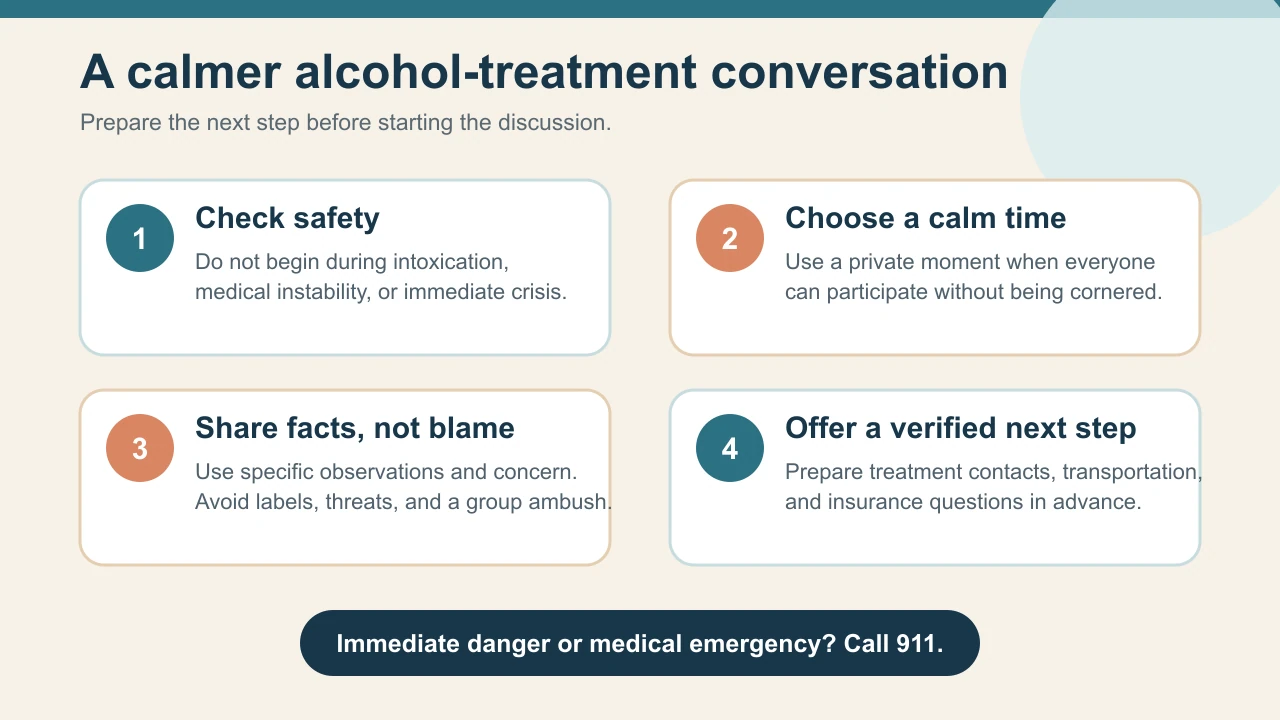
- 1Do not start the conversation while the person is intoxicated or in immediate crisis.
- 2Use specific observations and concern rather than labels, blame, or a group ambush.
- 3Prepare more than one realistic treatment starting point before the conversation.
- 4A formal intervention may require guidance from a qualified professional.
Families searching for an alcohol intervention in Palm Beach County are often trying to answer two questions at once: How do we talk about the drinking, and what will we do if the person accepts help?
Preparation matters. A productive conversation is different from an ambush, an argument, or an attempt to force a clinical decision at the kitchen table. The goal is to communicate concern clearly, protect immediate safety, and make the next treatment step easier to take.
Check Safety Before Starting the Conversation
Do not begin while the person is intoxicated, driving, threatening harm, experiencing severe withdrawal symptoms, or medically unstable. NIAAA notes that alcohol withdrawal can become dangerous and that some people require medical monitoring.
Call 911 or seek emergency care when there is immediate danger, a seizure, severe confusion, loss of consciousness, trouble breathing, or another urgent medical concern. A family conversation is not a substitute for emergency assessment.
If the situation is stable, choose a private time when the person is sober enough to participate and no one needs to rush away.
Avoid Turning Concern Into an Ambush
NIAAA recommends a calm, supportive approach and warns against ganging up on or cornering the person. A surprise gathering with several angry relatives can make defensiveness more likely and may reduce the chance of a useful conversation.
Decide who should speak. In many cases, one or two trusted people are enough. Anyone who cannot remain calm, respect privacy, or follow the plan should not lead the conversation.
Use language such as:
- “I am concerned because I have noticed…”
- “I care about you, and I want to help you look at options.”
- “Would you be willing to speak with a qualified professional today?”
Avoid diagnosing the person, arguing about every past event, or presenting addiction as a failure of willpower.
Prepare Facts, Not a Prosecution
Write down two or three specific observations that directly affect safety, health, work, or family life. Keep the wording factual.
For example:
- “You missed work twice after drinking this month.”
- “You fell last weekend and could not remember what happened.”
- “The children were frightened during the argument.”
Do not bring a long list designed to shame the person. The conversation should explain why the family is concerned and why professional help is being suggested now.
Prepare Realistic Treatment Starting Points
Before speaking, identify options rather than making one program the only acceptable answer. Depending on the person's condition and assessment, the starting point could involve a medical appointment, alcohol treatment, detox, residential care, or another qualified service.
Ask each provider:
- Is an assessment available today?
- What should the person bring?
- How is withdrawal risk evaluated?
- Which levels of care are currently offered?
- Is transportation available or required?
- How is insurance verified?
- What happens if the person is not appropriate for that program?
Do not promise admission, coverage, or a specific clinical recommendation before the provider confirms it.
Decide What Help the Family Can Offer
Offer support that makes the next step easier:
- Sit with the person during the first call
- Arrange safe transportation
- Help gather insurance and medication information
- Take care of children, pets, or urgent household needs
- Attend a family education session if invited
Do not offer to hide consequences, provide money for alcohol, or drive with someone who is impaired. Support and boundaries can exist at the same time.
Know When a Formal Intervention Needs Professional Guidance
The word “intervention” can describe a simple family conversation or a structured process led by a professional. If the situation involves repeated failed conversations, violence, serious mental health symptoms, legal risk, complex family conflict, or high medical risk, consider speaking with a qualified clinician or intervention professional before organizing a group meeting.
Ask about credentials, approach, emergency planning, fees, and how treatment options are selected. Avoid anyone who guarantees admission, recovery, or a particular outcome.
Plan for More Than One Response
The person may agree, refuse, ask for time, or accept only part of the proposed plan. Decide beforehand how the family will respond without escalating.
If the person says yes, move directly to the prepared next step. If the person says no, keep the conversation brief, restate the concern, and explain any boundaries that the family can realistically maintain.
NIAAA suggests allowing time to think when options are rejected and asking what kind of help the person might consider. A refusal during one conversation does not mean the family should stop protecting safety or seeking guidance.
Bring This Palm Beach County Checklist
- Is everyone currently safe and stable enough to talk?
- Who can communicate calmly and privately?
- Which facts will we share without blame?
- What treatment starting points have we verified?
- What practical help can we offer immediately?
- Which boundaries can we maintain consistently?
- When should we call emergency or professional support?
For current Palm Beach admissions and treatment information, call Amity Palm Beach at (888) 664-0182 or review the admissions process.
This article is for educational purposes only and is not medical advice, diagnosis, treatment, or a substitute for professional intervention planning. If someone may be in immediate danger, call 911 or seek emergency care.
Frequently Asked Questions
Should the whole family confront someone about their drinking?
Not automatically. NIAAA recommends avoiding an approach that makes the person feel cornered. A smaller, calm conversation or guidance from a qualified professional may be more appropriate.
When is the wrong time to discuss alcohol treatment?
Avoid beginning the conversation while the person is intoxicated, medically unstable, driving, or in an immediate crisis. Use emergency services when safety cannot wait.
How can Amity Palm Beach help with the next step?
Call (888) 664-0182 to ask about current admissions, alcohol treatment, detox, residential care, and insurance-verification options.
Sources & References
Read the sources referenced in this article.
- Starting the Conversation — National Institute on Alcohol Abuse and Alcoholism (2026)
- Quality Treatment for Mental Health, Drugs and Alcohol — Substance Abuse and Mental Health Services Administration (2023)
- Alcohol Use Disorder: From Risk to Diagnosis to Recovery — National Institute on Alcohol Abuse and Alcoholism (2025)
Amity Palm Beach
Amity Palm Beach