
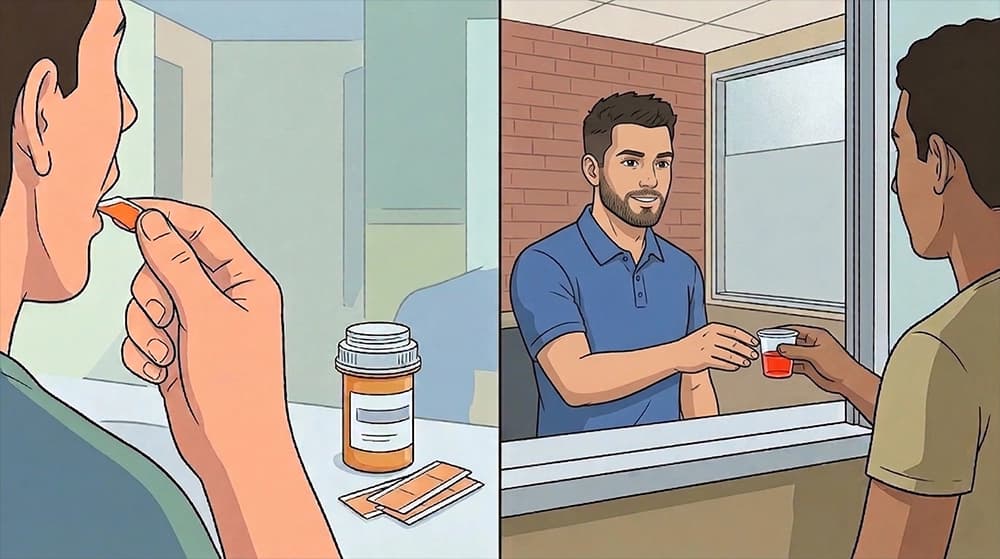
Suboxone and methadone are both evidence-based medications for opioid use disorder, but they differ in how they work, how they are prescribed, and what level of structure may be needed. The right choice depends on opioid history, treatment access, medical factors, and the person's recovery needs.
- 1Suboxone and methadone are both established medications used to support opioid use disorder treatment.
- 2Methadone is typically provided through highly structured opioid treatment programs, while Suboxone may be prescribed in more settings depending on regulations and clinical fit.
- 3Clinical history, overdose risk, treatment adherence, and access to care all influence whether one option may be more appropriate.
- 4Medication-assisted treatment works best when paired with counseling, recovery planning, and continued follow-up.
- 5A professional assessment can help determine whether /programs/medication-assisted-treatment/, detox, or another level of support is the right next step.
In Palm Beach and West Palm Beach, families searching for opioid treatment often compare suboxone vs methadone because both medications are widely used in recovery planning. The confusion usually comes from hearing that both help with opioid cravings and withdrawal while being offered through different treatment models. Understanding those differences can make the decision feel less abstract and more practical.
At Amity Palm Beach, we explain these medications as two evidence-based tools with different strengths, structures, and access points. The question is not which one wins in every case. The real question is which option fits a person's opioid history, daily stability, treatment access, and long-term recovery needs alongside medication-assisted treatment and broader opioid treatment.

How do Suboxone and methadone work differently?
Both medications interact with opioid receptors, but they do so in different ways. Methadone is a full opioid agonist, meaning it activates opioid receptors more fully. Suboxone contains buprenorphine, which is a partial agonist, along with naloxone, which is added to discourage certain forms of misuse.
That difference affects how each medication is used:
- Methadone may offer stronger receptor activation for some people with high opioid tolerance
- Suboxone may provide a ceiling effect that can lower some overdose risk in certain situations
- Both can reduce cravings and withdrawal symptoms when properly managed
- Neither medication should be evaluated apart from clinical monitoring and treatment adherence
These are medical distinctions, but they matter in real life because they shape dose titration, monitoring, and how flexible treatment can be from week to week.
Why is treatment structure so different?
One of the biggest differences in a suboxone vs methadone comparison is not the medication itself. It is the system around it. Methadone is usually dispensed through licensed opioid treatment programs with a high level of structure, especially early on. Suboxone may be prescribed in office-based settings or treatment programs when a clinician believes that model is appropriate.
This can influence:
- How often someone needs to check in for dosing or monitoring
- Whether transportation or work schedules make treatment harder to sustain
- How much daily structure may help support accountability
- How quickly medication access can be arranged
For some people in South Florida, daily structure is a benefit because it creates consistency and close follow-up. For others, the required routine can become a barrier if work, parenting, or travel make attendance difficult.
Who may be a better fit for methadone?
Methadone may be considered when someone has a long history of opioid dependence, high tolerance, repeated relapse, or difficulty stabilizing with less intensive approaches. It can also be a reasonable choice when close daily monitoring is clinically useful.
Methadone may be considered when:
- Opioid use has been severe or prolonged
- Previous medication attempts have not worked well
- The person needs a highly structured treatment setting
- Cravings remain intense despite prior treatment
- Daily follow-up would improve safety or consistency
This does not mean methadone is only for the most severe situations. It means its structure and pharmacology may match certain recovery needs better than a more flexible approach.
Who may be a better fit for Suboxone?
Suboxone may appeal to people who need a treatment option that can be managed with more flexibility once they are clinically stable. It is often discussed when someone wants support for cravings and withdrawal but also needs to maintain work, school, or family routines.
Suboxone may be considered when:
- The person can follow a treatment plan reliably
- Office-based follow-up is realistic
- A partial agonist approach is clinically appropriate
- The person wants medication support without a daily clinic schedule
- Step-down planning from detox is underway
Flexibility can be helpful, but it also requires stability. A person still needs ongoing monitoring, counseling, and honest communication about cravings, slip risk, and other substances being used.
What other factors influence the decision besides the medication?
Medication choice is rarely based on one detail alone. Clinicians usually look at the entire situation rather than the medication name in isolation.
Important factors may include:
- History of overdose or relapse
- Use of fentanyl or other high-potency opioids
- Co-occurring alcohol or benzodiazepine use
- Mental health symptoms that affect treatment adherence
- Housing stability, transportation, and social support
- Prior response to medication for opioid use disorder
In West Palm Beach, this broader assessment matters because access to care is only useful when the treatment model is realistic. A medication can be effective on paper and still fail if the structure does not match the person's actual life.
That is also why family context matters. Someone in Palm Beach who has reliable transportation, stable housing, and consistent daily routines may be able to sustain one treatment structure more easily than someone whose schedule changes constantly. Matching the medication plan to real-world logistics can improve follow-through just as much as the medication choice itself.
Does one medication work faster or better?
People often want a simple answer, but the better question is whether the medication improves retention in treatment, reduces opioid use, lowers overdose risk, and helps the person stay engaged in recovery. Both methadone and Suboxone can do that when properly matched and monitored.
The practical differences often come down to:
- How quickly someone can start treatment safely
- Whether withdrawal status affects induction planning
- How much supervision is needed during early stabilization
- Whether the person can stay connected to counseling and follow-up
That is why medication-assisted treatment should not be treated like a one-time prescription decision. It works best as part of a larger plan that includes therapy, relapse prevention, and routine reassessment.
What should happen before someone chooses one?
An assessment should come first. Opioid history, recent use, treatment experience, overdose history, and co-occurring mental health needs all affect whether Suboxone or methadone may fit better. Some people also need medically supervised withdrawal management before stepping into a longer-term medication plan.
The goal is not to promise that one medication will solve everything. The goal is to choose the option that is most likely to keep the person engaged, stable, and moving forward in treatment.
That decision is easier when the assessment is grounded in current opioid use, prior treatment attempts, and what support is realistically available at home.
If you are comparing Suboxone vs methadone for yourself or a loved one, Amity Palm Beach can help you sort through the differences. Our team supports people in Palm Beach, West Palm Beach, and throughout South Florida who need help starting opioid treatment safely. Call (888) 664-0182 or visit admissions to take the next step.
Medical disclaimer: This article is for informational purposes only and does not constitute medical advice. Always consult with a healthcare provider for personalized recommendations.
Frequently Asked Questions
What is the difference between Suboxone and methadone?
Suboxone and methadone are both used to treat opioid use disorder, but they differ in medication ingredients, how strongly they activate opioid receptors, and how treatment is delivered. Methadone is usually dispensed through specialized opioid treatment programs, while Suboxone may be prescribed in more flexible outpatient settings when clinically appropriate.
Is Suboxone safer than methadone?
Neither medication is universally better for everyone. Each has a different risk and monitoring profile. Safety depends on dose, other substances involved, medical history, and whether the person can follow the recommended treatment structure.
Why would someone choose methadone over Suboxone?
Methadone may be considered when someone has a long history of opioid use, has not done well with other medications, or needs a more structured daily treatment model. The right choice depends on clinical fit rather than personal preference alone.
Where can I find help comparing Suboxone vs methadone in West Palm Beach?
In West Palm Beach and the broader Palm Beach area, an opioid treatment assessment can help clarify whether withdrawal severity, relapse history, and access to care point toward one medication approach over another. That evaluation can also identify whether detox or a step-down plan is needed first.
How do I start opioid treatment at Amity Palm Beach?
Call Amity Palm Beach at (888) 664-0182 to discuss opioid use history, current symptoms, and treatment goals. Our admissions team can help you review /programs/medication-assisted-treatment/, /addiction-treatment/opioids/, and /programs/detox/ to plan the safest next step.
Sources & References
Read the sources referenced in this article.
- Medications for Opioid Use Disorder — SAMHSA (2025)
- Methadone — MedlinePlus (2025)
- Buprenorphine — MedlinePlus (2025)
Amity Palm Beach
Amity Palm Beach