Outpatient drug rehab costs vary significantly based on program type, location, and insurance coverage. Most people pay between $1,000 to $10,000 for treatment, though intensive programs can cost more.
We at Amity Palm Beach understand that knowing how much outpatient drug rehab costs helps families plan for recovery. This guide breaks down pricing for different treatment levels and shows how to maximize your insurance benefits.
Average Costs of Outpatient Drug Rehab Programs
Intensive Outpatient Program (IOP) Pricing
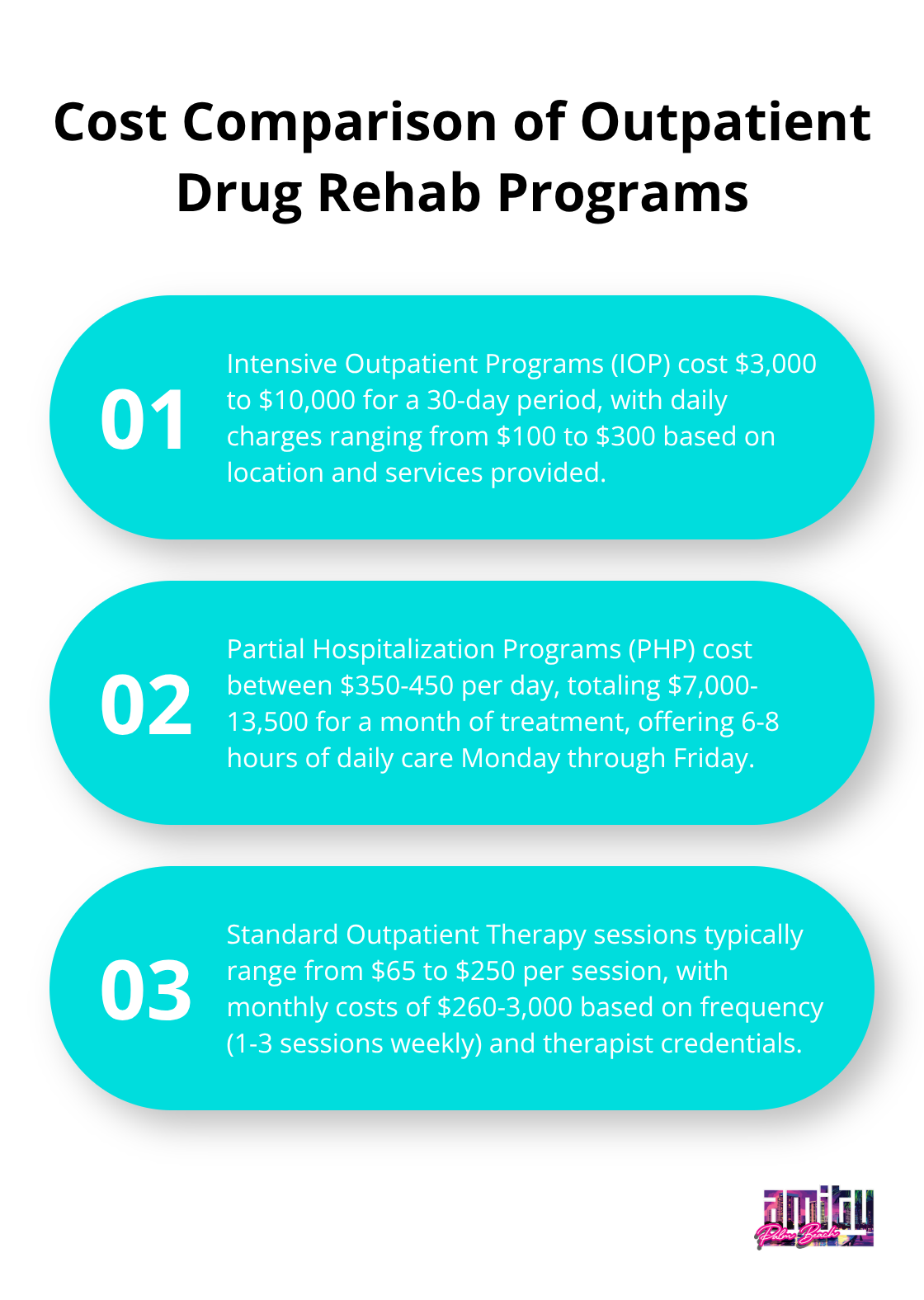
Intensive Outpatient Programs cost $3,000 to $10,000 for a 30-day period, which makes them the most expensive outpatient option. These programs require 9-20 hours of treatment weekly and include group therapy, individual counseling, and family sessions. Most facilities charge $100-300 per day based on your location and the services they provide.
IOPs work best for people who step down from residential care or those with moderate to severe addiction who need structure while they maintain work schedules. The higher cost reflects the intensive nature of these programs (typically 3-5 days per week for several hours each day).
Partial Hospitalization Program (PHP) Costs
PHP costs fall between $350-450 per day, which totals $7,000-13,500 for a month of treatment. These programs provide 6-8 hours of daily care Monday through Friday without overnight stays. PHP bridges the gap between inpatient and outpatient care and offers medical monitoring with intensive therapy.
Insurance typically covers 60-90% of PHP costs at in-network facilities. The higher price reflects comprehensive services that include psychiatric care, medication management, and crisis intervention support.
Standard Outpatient Therapy Session Rates
Individual outpatient therapy sessions typically range from $65 to $250 per session, with some private practices charging up to $300 per hour, while group sessions range from $40-80 per session. Most people attend 1-3 sessions weekly, which creates monthly costs of $260-3,000 based on frequency and therapist credentials.
Licensed clinical social workers charge less than psychiatrists or psychologists with specialized addiction treatment certifications. Sessions focus on relapse prevention, coping strategies, and address underlying mental health conditions that contribute to substance use.
The wide cost variation depends heavily on your insurance coverage and whether your chosen provider accepts your plan. Most insurance plans now cover these services, but your out-of-pocket costs will vary significantly based on your specific benefits and deductible requirements.
Insurance Coverage for Outpatient Addiction Treatment
What Most Insurance Plans Cover
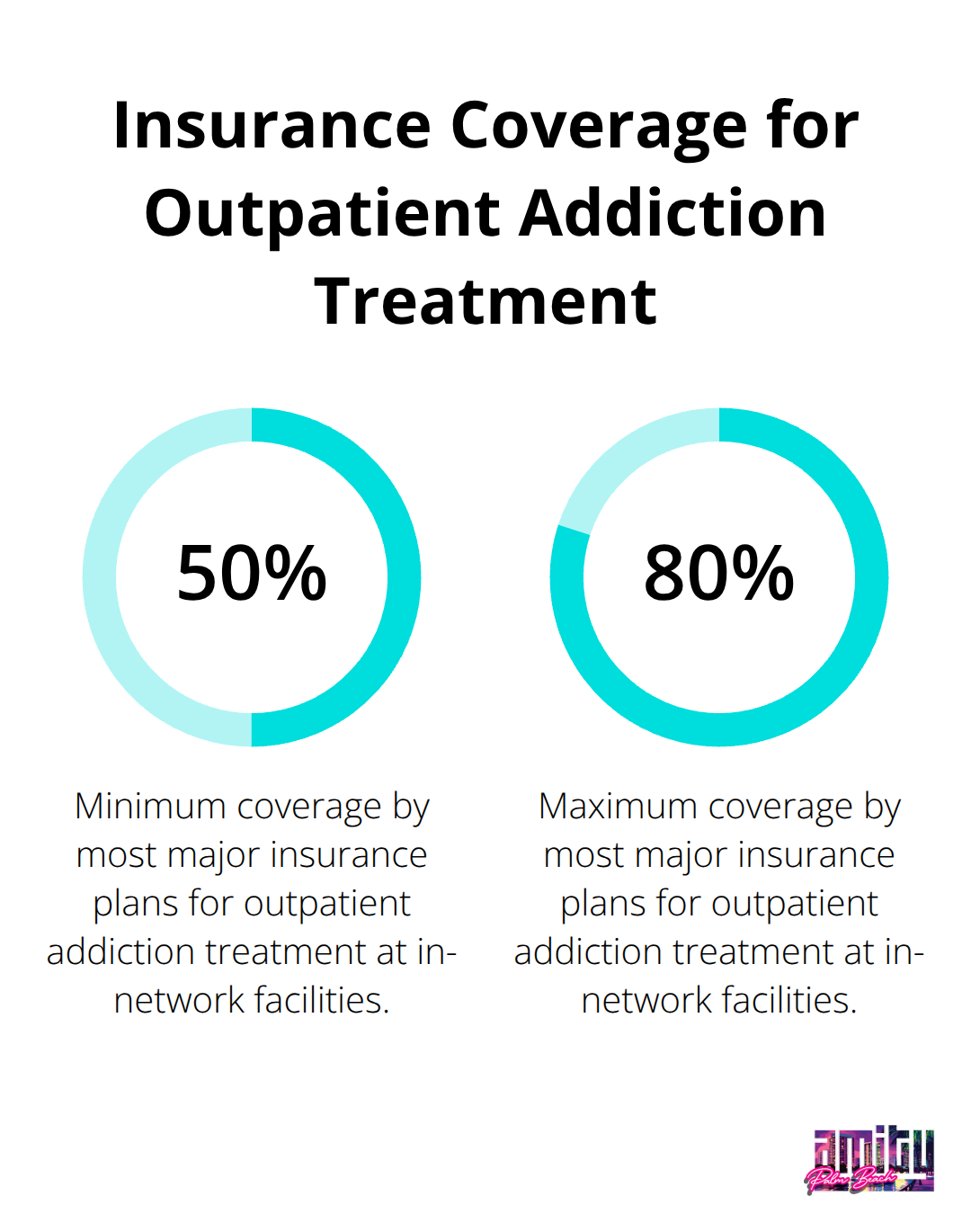
Most major insurance plans now cover 50-80% of outpatient addiction treatment costs at in-network facilities. The Affordable Care Act mandates that insurers provide coverage for mental health and substance abuse benefits as essential health services. Medicare covers addiction treatment for individuals over 65 and some younger people with disabilities, while Medicaid provides income-based coverage in all states.
Private insurance typically covers individual therapy sessions, group counseling, medication management, and psychiatric evaluations. In-network providers charge copays that range from $20-50 per session, which makes treatment accessible for most families who maintain consistent insurance coverage.
Understanding Your Benefits and Copays
Your actual costs depend on three key factors: deductible amount, copay structure, and whether your provider accepts your insurance plan. Most plans require you to meet an annual deductible of $1,000-5,000 before coverage begins (though preventive mental health services often have no deductible requirement).
After you meet your deductible, you pay copays of $20-50 for therapy sessions and $10-30 for group sessions at in-network facilities. Out-of-network providers typically require you to pay 30-50% of total costs even after you meet your deductible, which can create significant financial strain for families.
How to Verify Coverage Before Starting Treatment
Call your insurance company directly and ask these specific questions: What is my annual deductible for mental health services, what are my copays for individual and group therapy, and does my plan require prior authorization for outpatient addiction treatment.
Request a list of in-network providers in your area and confirm that your chosen facility accepts your specific plan, not just your insurance company. Many addiction treatment centers offer free insurance verification services that check your benefits and estimate your out-of-pocket costs before you start treatment.
These verification steps prevent surprise bills and help you budget accurately for treatment expenses. Understanding your coverage details also helps you choose between different program types based on what your insurance covers best.
Factors That Affect Outpatient Rehab Costs
Program Duration and Treatment Intensity
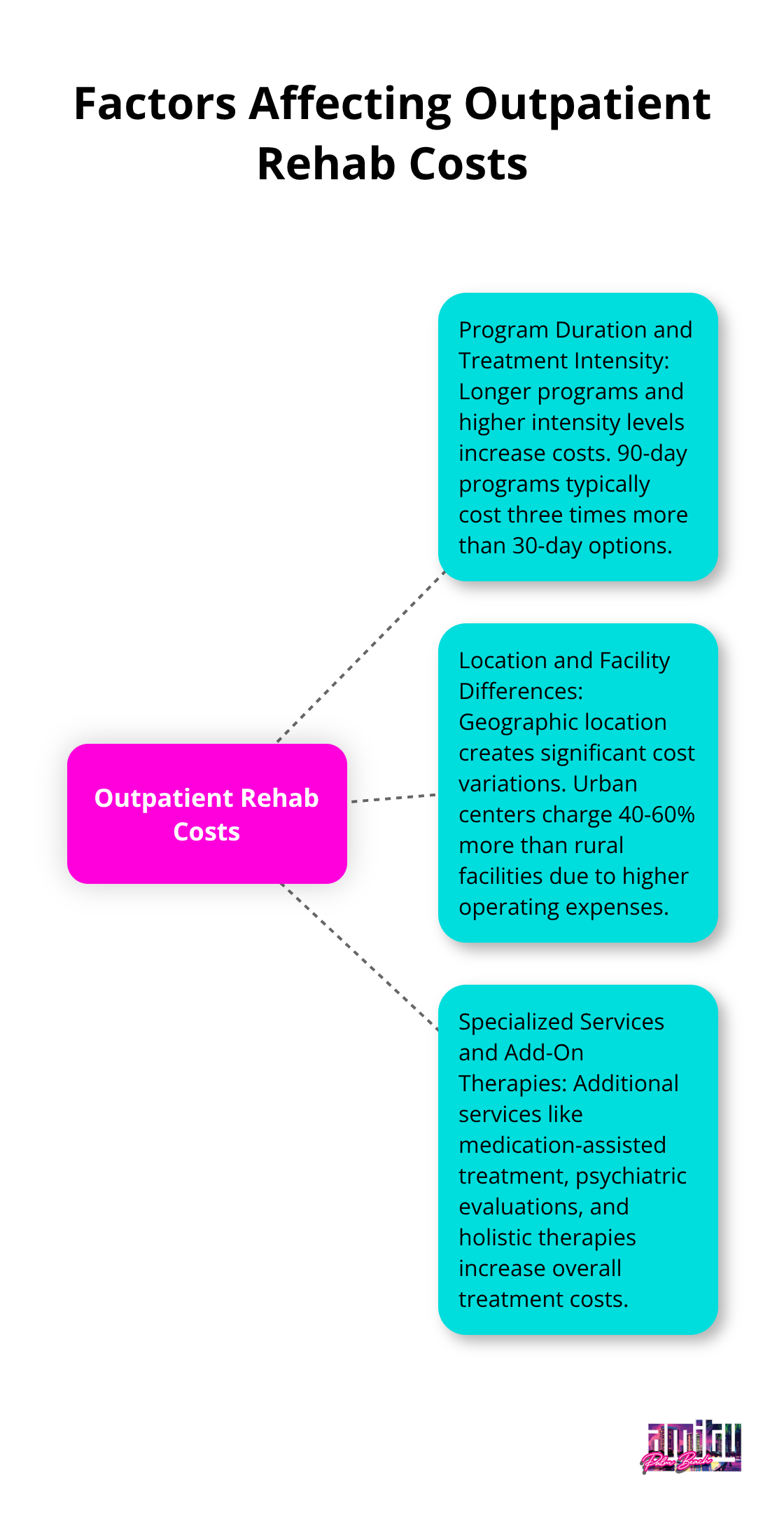
Treatment length directly impacts your total cost, with most programs lasting 30-90 days. Standard outpatient therapy costs $260-3,000 monthly for 1-3 weekly sessions, while intensive programs that require 9-20 hours weekly cost $3,000-10,000 for 30 days. Programs that last 90 days typically cost three times more than 30-day options, but research from the National Institute on Drug Abuse shows that treatment that lasts at least 90 days significantly reduces relapse rates compared to shorter programs.
Higher intensity levels mean more staff, resources, and specialized services. PHP programs cost $350-450 daily because they provide 6-8 hours of care with medical oversight, while standard therapy sessions cost $65-250 because they require only 1-2 hours weekly. The staff-to-client ratio also affects price, with facilities that offer individualized attention charging premium rates for personalized treatment plans.
Location and Facility Differences
Geographic location creates massive cost variations across states. Wyoming records the highest residential treatment costs at $80,000, while Idaho offers options that start around $6,000 for similar services. Urban centers like Los Angeles and New York charge 40-60% more than rural facilities due to higher real estate costs, staff salaries, and operating expenses (which directly impact treatment pricing).
Luxury facilities charge $80,000 monthly for premium amenities like private rooms, spa services, and gourmet meals, while nonprofit centers offer fees based on income. State-funded programs provide free or low-cost options for individuals who qualify, which creates cost ranges from $0 to $80,000 for similar treatment levels.
Specialized Services and Add-On Therapies
Additional services significantly increase treatment costs beyond basic therapy sessions. Medication-assisted treatment programs offer comprehensive addiction treatment options, while psychiatric evaluations cost $200-500 per session. Holistic therapies like yoga, meditation, and art therapy typically add $50-150 per session to your total treatment cost.
Dual diagnosis treatment for co-occurring mental health conditions requires specialized staff and extended treatment time (which increases costs by 25-40% compared to addiction-only programs). Family therapy sessions cost $100-200 per session, while specialized programs for professionals or LGBTQ+ individuals charge premium rates for tailored treatment approaches that address unique challenges and stressors.
Final Thoughts
Outpatient drug rehab costs vary widely, but most families pay between $1,000-10,000 for complete treatment programs. Insurance plans typically cover 50-80% of costs at in-network facilities, which makes recovery accessible for many people. The question “how much is outpatient drug rehab” depends on program intensity, location, and your specific insurance benefits.
Quality care requires you to compare multiple facilities and verify insurance benefits before treatment starts. State-funded programs offer free options for those who qualify, while many centers provide payment plans and sliding scale fees based on income. Nonprofit organizations often charge reduced rates (making treatment affordable for families with limited resources).
We at Amity Palm Beach accept most major insurance plans and provide free confidential assessments to help you understand your coverage options. Our team offers evidence-based treatment with personalized care approaches. Contact us today to begin your recovery with professional support that addresses your unique needs.