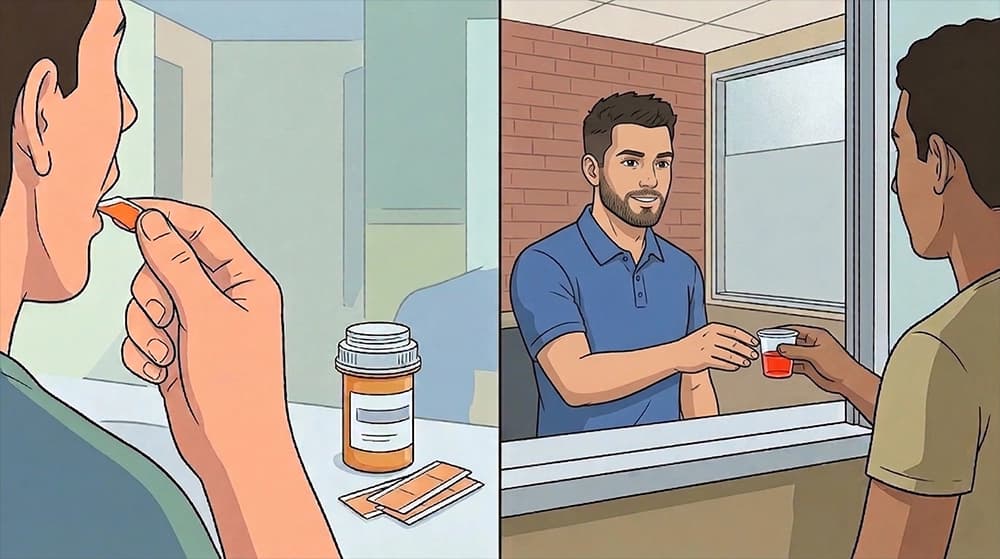

Medication-assisted treatment (MAT) combines FDA-approved medications with behavioral therapy to treat opioid use disorder. It is not trading one addiction for another—it is evidence-based medicine that reduces overdose risk, improves retention, and supports lasting recovery.
- 1MAT uses FDA-approved medications like buprenorphine, methadone, and naltrexone alongside counseling to treat opioid use disorder effectively.
- 2Research shows MAT reduces illicit opioid use, lowers overdose risk, and improves treatment retention compared to abstinence-only approaches.
- 3MAT medications stabilize brain chemistry rather than producing a high, making them fundamentally different from illicit opioid use.
- 4People receiving MAT are fully capable of working, parenting, and contributing to their communities while in treatment.
- 5Stigma around MAT remains the biggest barrier preventing people from accessing effective, life-saving treatment for opioid use disorder.
Medication-assisted treatment has become one of the most effective approaches for addressing opioid use disorder, yet persistent medication-assisted treatment myths continue to prevent people from accessing care. These misconceptions—often rooted in stigma rather than evidence—create unnecessary barriers for individuals and families who could benefit from proven, life-saving treatment.
At Amity Palm Beach, we believe that accurate information empowers better decisions. Understanding the facts about MAT helps people move past fear and toward recovery grounded in evidence-based medicine.
Myth: MAT Is Just Trading One Addiction for Another
This is the most widespread and harmful misconception about medication-assisted treatment. The claim sounds logical on the surface—if someone takes a medication that acts on opioid receptors, aren't they still "addicted"?
The answer is no, and the distinction matters. Medications used in MAT—buprenorphine, methadone, and naltrexone—are FDA-approved, carefully dosed, and administered under medical supervision. They stabilize brain chemistry that has been disrupted by opioid use without producing the euphoric high associated with illicit substances. This is fundamentally different from active addiction, where compulsive use continues despite harmful consequences.
Consider the comparison to other chronic conditions. A person with diabetes who takes insulin is not "addicted" to insulin—they are managing a medical condition with an appropriate medication. A person with high blood pressure who takes a daily medication is not "dependent" in a harmful sense—they are using medicine to maintain health. MAT follows the same principle: using proven pharmacological tools to manage a chronic brain condition while the person engages in therapy and rebuilds their life.
Research published through the National Institute on Drug Abuse confirms that MAT medications reduce cravings, prevent withdrawal symptoms, and block the reinforcing effects of illicit opioids. This combination allows individuals to participate fully in counseling, address underlying issues, and develop the skills needed for sustained recovery.
Myth: MAT Does Not Actually Help People Get Sober
This myth contradicts decades of clinical evidence. Studies consistently show that individuals receiving MAT have significantly higher treatment retention rates and are up to 50 percent less likely to return to illicit opioid use compared to those receiving abstinence-based treatment alone. MAT also reduces overdose mortality—a critical outcome given the ongoing opioid crisis.
The effectiveness of MAT increases when medications are combined with counseling and therapy, psychosocial support, and lifestyle changes. This comprehensive approach addresses both the biological mechanisms of addiction and the psychological, social, and environmental factors that contribute to substance use. Our medication-assisted treatment program integrates these components into individualized treatment plans.
Success in MAT looks different for each person. For some, it means long-term medication maintenance alongside ongoing therapy. For others, it serves as a bridge to eventual medication tapering after stability is well established. Both paths represent legitimate recovery, and the best approach depends on individual clinical needs rather than external judgments about what recovery "should" look like.
Myth: People on MAT Cannot Work or Function Normally
This misconception assumes that MAT medications impair cognitive function or daily performance. In reality, properly dosed MAT medications do not produce sedation, cognitive impairment, or the functional limitations associated with active opioid use.
People receiving MAT are fully capable of working, parenting, studying, and participating in their communities. In fact, MAT often enables people to reclaim these roles. By reducing the constant cycle of cravings, withdrawal, and compulsive drug-seeking behavior, medications free up the mental and physical energy needed for productive daily life.
Many employers, professional licensing boards, and agencies now recognize MAT as legitimate medical treatment and have updated their policies accordingly. While stigma still creates challenges in some settings, the legal and professional landscape increasingly supports individuals receiving evidence-based addiction treatment.
Myth: MAT Is Only for People Who Cannot Quit on Their Own
This myth confuses willpower with brain chemistry. Opioid use disorder involves measurable changes in the brain's reward, stress, and decision-making systems. These changes persist long after someone stops using opioids, which is why relapse rates are so high without pharmacological support.
Suggesting that someone should simply "quit cold turkey" misunderstands the nature of the condition. Abrupt cessation of opioids often triggers severe withdrawal symptoms that can be medically dangerous and dramatically increase relapse risk. MAT is not a crutch for the weak—it is a scientifically validated intervention for a complex medical condition.
The American Society of Addiction Medicine, the National Institutes of Health, and the World Health Organization all endorse MAT as a frontline treatment for opioid addiction. These endorsements are based on evidence, not opinion. Choosing MAT reflects informed medical decision-making, not personal failure.

Myth: You Cannot Truly Be in Recovery If You Take Medication
Recovery is defined by improved health, function, and quality of life—not by the absence of all medications. A person managing opioid use disorder with buprenorphine while holding a job, rebuilding relationships, and engaging in therapy is in recovery by every clinical standard that matters.
This myth causes real harm. When people internalize the belief that medication disqualifies their recovery, they may discontinue treatment prematurely, increasing the risk of relapse and overdose. When communities or support groups reinforce this belief, they create environments where people receiving MAT feel excluded from the recovery community they need.
Expanding our understanding of what recovery looks like—including recovery that involves medication—saves lives and reduces the shame that keeps people from seeking help.
Moving Past Stigma Toward Evidence-Based Care
Stigma remains the single biggest barrier to MAT access. When individuals, families, healthcare systems, or employers accept myths about medication-assisted treatment, they create obstacles that delay or prevent effective care. Overcoming this stigma requires education, compassion, and a willingness to prioritize evidence over assumption.
If you or someone you love is considering treatment for opioid use disorder, know that effective options exist. Our team at Amity Palm Beach provides medication-assisted treatment alongside comprehensive counseling and support services. For individuals who need medical stabilization first, we coordinate with detoxification services to ensure a safe, supported transition into ongoing care.
Recovery from opioid use disorder is possible, and it does not require suffering through it alone. Learn more about whether your insurance covers rehab in Florida. If myths about MAT have held you back, we hope the facts help you take the next step. Call Amity Palm Beach at (888) 664-0182 to speak with our admissions team about treatment options that meet you where you are—without judgment, with evidence and compassion.
Medical disclaimer: This article is for informational purposes only and does not constitute medical advice. Always consult with a healthcare provider for personalized recommendations.
Frequently Asked Questions
Is medication-assisted treatment just trading one addiction for another?
No. MAT medications like buprenorphine and methadone are carefully dosed, regulated medications that stabilize brain chemistry without producing the euphoric high associated with opioid misuse. They reduce cravings and withdrawal symptoms so individuals can focus on therapy and rebuilding their lives. This is comparable to using insulin for diabetes—it is medical treatment, not substitution.
Does MAT actually help people recover from opioid addiction?
Yes. Research consistently shows that MAT significantly improves treatment outcomes. People receiving MAT have higher retention rates, are up to 50 percent less likely to return to illicit opioid use, and have substantially lower overdose mortality. When combined with counseling and support services, MAT addresses both the biological and behavioral aspects of addiction.
Can people on MAT work and function normally?
Absolutely. With proper dosing and monitoring, MAT medications do not impair cognitive function or daily performance. Many people in MAT maintain employment, care for families, pursue education, and contribute to their communities. By reducing cravings and withdrawal symptoms, MAT often enables people to reclaim aspects of life that active addiction disrupted.
Is MAT only for people who lack willpower to quit on their own?
No. Opioid use disorder is a chronic medical condition involving changes in brain chemistry—not a lack of willpower or moral character. Abrupt cessation without medical support often leads to severe withdrawal and high relapse rates. The National Institutes of Health and American Society of Addiction Medicine both recognize MAT as the standard of care for opioid use disorder regardless of individual willpower.
How do I start medication-assisted treatment at Amity Palm Beach?
Contact our [admissions team](/admissions/) to discuss your situation, treatment history, and goals. We will help determine whether MAT is appropriate for your needs and coordinate with detox services if medical stabilization is needed first. Our team provides confidential, judgment-free guidance throughout the process. Call Amity Palm Beach at (888) 664-0182 to get started.
Sources & References
This article is based on peer-reviewed research and authoritative medical sources.
- Medications for Substance Use Disorders — SAMHSA (2024)
- Medications to Treat Opioid Use Disorder Research Report — National Institute on Drug Abuse (2024)
- The National Practice Guideline for the Treatment of Opioid Use Disorder — American Society of Addiction Medicine (2024)
Amity Palm Beach
Amity Palm Beach Medical Team